
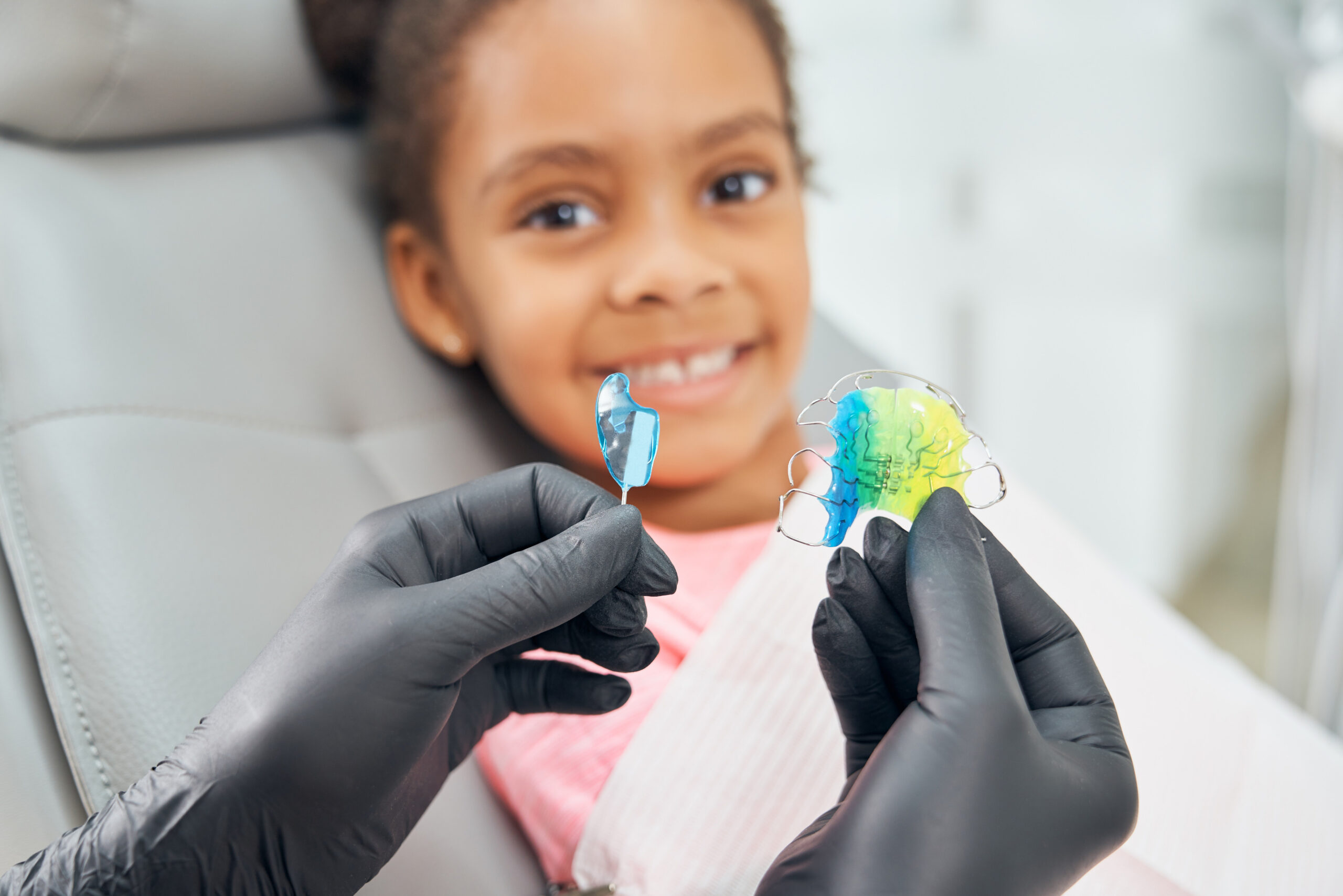
Many parents wonder when their child should first visit an orthodontist. The American Association of Orthodontists recommends that every child have their first orthodontic evaluation by age 7. This isn’t about rushing into early orthodontics. It’s about catching potential issues while your child’s jaw is still growing and easier to guide.
What Is an Early Orthodontic Evaluation?
An early orthodontic evaluation is a screening where an orthodontist assesses your child’s dental development, including jaw growth, bite alignment, tooth spacing, and the position of emerging permanent teeth. It is not a commitment to immediate care. Far from it. By age 7, most children have a mix of baby teeth and permanent teeth, which gives the orthodontist real insight into how their smile is developing.
During this evaluation, the orthodontist examines all of these factors together. The goal is to spot subtle issues that could become more significant if left unaddressed, and to establish a baseline for tracking development over time. At Gig Harbor – Tacoma Orthodontics, Board Certified orthodontist Dr. Alatsis recommends this early screening for every child because it provides a clear picture of what’s happening beneath the surface, not just what’s visible.
Here’s what many parents in the Gig Harbor and Tacoma area find reassuring: most children evaluated at age 7 won’t need immediate intervention. Instead, they’ll simply be monitored. The orthodontist will track their development and recommend next steps only when (and if) it becomes necessary. That monitoring alone gives families valuable peace of mind.
According to the American Association of Orthodontists, early evaluation allows orthodontists to detect problems while baby teeth are still present and the jaw is actively growing. This window of opportunity makes certain corrections easier and more effective than waiting until all permanent teeth have erupted. Children’s bones are more responsive during this stage, which means appliances like palatal expanders work faster and with less discomfort.
What Happens During Your Child’s First Orthodontic Visit
Your child’s first orthodontic visit is designed to be quick, comfortable, and even enjoyable. The consultation at Gig Harbor – Tacoma Orthodontics takes about 30 to 45 minutes, and there’s no discomfort involved.
The evaluation usually includes:
- A visual examination of your child’s teeth, jaw, and bite to check for obvious alignment issues
- Digital imaging or X-rays to see developing teeth below the gumline and assess bone structure
- Bite assessment to identify how the upper and lower teeth come together
- Discussion of findings with you and your child in easy-to-understand terms
After the examination, the orthodontist will explain exactly what they observed. If everything looks good, your child will simply be scheduled for periodic monitoring visits. If there are concerns, the orthodontist will discuss whether early intervention is beneficial or if it’s better to wait and watch.
When early orthodontic care is recommended, a plan built around your child’s specific needs is created. Dr. Alatsis, who is Board Certified by the American Board of Orthodontics, takes time to explain every option so families make informed decisions together.
There are no scary tools or uncomfortable procedures. It really is just a friendly conversation about your child’s smile.
Benefits of Seeing an Orthodontist by Age 7
Evaluating your child by age 7 offers five key advantages: early jaw correction, guided tooth eruption, reduced trauma risk, simpler future orthodontic care, and habit intervention. Here’s a closer look at each one.
How Can Early Detection Help With Jaw Growth Issues?
While your child’s jaw is still growing, certain problems are far easier to address. Narrow palates, crossbites, and underbites respond more effectively to correction at this stage because the orthodontist works with your child’s natural growth patterns rather than against them.
This is one of the biggest reasons the AAO recommends age 7 as the starting point. Skeletal issues that are straightforward to correct in a growing child become significantly more complex, and sometimes surgical, in a teenager or adult whose jaw growth is complete.
What Role Does Monitoring Play in Guiding Permanent Teeth?
If baby teeth are lost too early or too late, permanent teeth erupt in problematic positions. Early monitoring helps the orthodontist intervene at the right moment, creating space or preserving it so adult teeth come in where they should.
Can Early Evaluation Reduce Trauma Risk?
Yes, and this one matters for active kids. Children with protruding front teeth are more susceptible to dental injuries during sports and play. Early orthodontic care brings these teeth into safer positions, reducing the risk of chips, fractures, and knocked-out teeth.
Does Early Intervention Simplify Orthodontic Care Later?
Addressing certain issues early reduces the complexity of adolescent orthodontic care. Some children who receive Phase 1 orthodontics need shorter time in traditional braces as teens. In some cases, the second phase is less involved than it would have been otherwise. In others, Phase 1 eliminates the need for extractions or more invasive procedures down the road.
What About Harmful Oral Habits?
Thumb-sucking, tongue thrusting, and mouth breathing all affect jaw development and tooth alignment. An orthodontist identifies these habits and recommends strategies to address them before they cause lasting changes. The sooner these habits are caught, the easier they are to redirect.
Early intervention isn’t about giving every 7-year-old traditional braces. It’s about identifying which children would benefit from timely care and which children simply need to be monitored as they grow.
Early Evaluation vs. Waiting Until the Teen Years
Parents in the Tacoma and Gig Harbor area frequently ask whether it’s better to have their child evaluated early or wait until adolescence when all permanent teeth have come in. The honest answer? It depends on your child’s specific situation. Board Certified orthodontist Dr. Alatsis explains the key differences between these two approaches.
| Factor | Early Evaluation (Age 7) | Waiting Until Teen Years |
|---|---|---|
| Best for | Detecting skeletal and bite issues | Straightening teeth after all permanent teeth erupt |
| Focus | Jaw growth guidance, creating space, correcting crossbites | Full alignment with traditional braces or Invisalign Teen |
| Growth advantage | Uses natural jaw growth to assist corrections | Jaw growth is mostly complete |
| Phases | Phase 1 now, Phase 2 later if needed | One phase of orthodontic care |
| Outcome | Reduces complexity of future care | Addresses all alignment issues at once |
What Is Phase 1 Orthodontics?
Phase 1 orthodontics focuses on skeletal and bite issues while the jaw is still actively growing. This might involve palatal expanders, partial traditional braces, or other appliances designed to guide development. Phase 1 lasts 6 to 18 months in most cases.
Not every child evaluated early will need Phase 1 orthodontics. Many are simply monitored until their permanent teeth come in, at which point they receive traditional braces or Invisalign Teen as a single-phase approach.
When Is Two-Phase Care the Right Choice?
Two-phase care benefits children with significant jaw discrepancies or bite problems. By addressing these issues early, the second phase during adolescence is shorter and less involved. In some cases, early intervention reduces the likelihood of needing tooth extractions or jaw surgery later.
Dr. Alatsis helps families determine which path is right for their child based on a thorough clinical evaluation and each child’s unique growth pattern.
What Affects the Cost of Early Orthodontic Care?
The cost of early orthodontic care depends on the type of intervention needed, its complexity, and duration. Many practices offer free initial evaluations, insurance covers a portion of Phase 1 orthodontics in many plans, and flexible financing is available to help families manage the investment.
At Gig Harbor – Tacoma Orthodontics, initial evaluations are complimentary. This removes the financial barrier to getting your child evaluated at the recommended age.
Phase 1 costs vary
The investment for early intervention depends on what’s being corrected and how long the process lasts. Simple space maintainers cost less than palatal expanders or partial traditional braces.
Insurance helps in many cases
Many dental insurance plans include orthodontic benefits for children that cover a portion of Phase 1 orthodontics. It’s worth checking with your insurance provider to understand your specific coverage.
Flexible financing spreads the cost over time
We work with families to create arrangements that fit their budgets, because affordability matters when it comes to your child’s oral health.
5 Signs Your Child Should See an Orthodontist Now
While every child should be evaluated by age 7, certain signs indicate your child would benefit from seeing an orthodontist sooner rather than later.
- Crowded, overlapping, or gapping teeth. These are signs that space management is needed as permanent teeth continue to emerge. Even if your child’s smile looks fine to you, an orthodontist sees developing issues beneath the surface that parents simply cannot detect on their own.
- Difficulty biting or chewing food. If your child avoids certain foods because they’re hard to bite into, or chews primarily on one side, bite alignment issues are likely affecting everyday function.
- Mouth breathing, snoring, or jaw clicking. Chronic mouth breathing and snoring are related to jaw development in many children. Clicking or popping sounds when your child opens their mouth signal a jaw joint concern worth evaluating.
- Early or late loss of baby teeth. Baby teeth fall out in a predictable sequence. Losing teeth very early (before age 5) or much later than peers affects how permanent teeth come in, and the timing matters more than most parents realize. This is one of the most overlooked warning signs.
- Protruding front teeth or a noticeable overbite or underbite. If your child’s front teeth stick out prominently, or if their lower jaw appears to jut forward or sit far behind the upper jaw, early evaluation is particularly important.
If you notice any of these signs, don’t wait until age 7. Schedule an evaluation to determine whether your child would benefit from early monitoring or intervention.
Frequently Asked Questions About Your Child’s First Orthodontic Visit
Is age 7 too young for traditional braces?
No, evaluation at age 7 doesn’t mean traditional braces at age 7. Most children evaluated at this age are simply monitored. If orthodontic care is recommended, it’s because the orthodontist has identified a specific issue that benefits from early correction.
What if my child still has baby teeth?
That’s completely expected, and actually the whole point. At age 7, the orthodontist evaluates how permanent teeth are developing beneath the gums and whether there’s adequate space for them to emerge properly. Baby teeth serve as placeholders, and their condition provides valuable information.
Does my child need a referral to see an orthodontist?
No referral is needed. You can contact an orthodontic practice directly to book a consultation. While many general dentists do refer patients when they notice potential issues, you don’t need to wait for a referral if you have concerns.
How long does Phase 1 orthodontics last?
Phase 1 orthodontics lasts between 6 and 18 months, depending on what’s being corrected. Palatal expansion takes less time, while correcting a significant crossbite runs longer. After Phase 1, there’s a resting period where your child is monitored as remaining permanent teeth come in.
Will my child need traditional braces again as a teen?
Some children who receive Phase 1 orthodontics will need a second phase during adolescence, while others won’t. It depends on how permanent teeth erupt and whether additional alignment is necessary. Your orthodontist will monitor development and discuss whether further care is recommended.
What’s the difference between an orthodontist and a dentist?
Orthodontists are dental specialists who complete two to three years of additional training beyond dental school, focusing exclusively on tooth movement and jaw alignment. For orthodontic evaluations and care, seeing a specialist like Board Certified orthodontist Dr. Alatsis ensures focused expertise in alignment and bite correction.
If your child is approaching age 7, or if you’ve noticed any of the signs mentioned above, an early evaluation provides the information you need to make the best decisions for their smile. Most kids who come in at this age just need monitoring, and that peace of mind alone is worth the visit. Contact Gig Harbor – Tacoma Orthodontics to set up a free consultation.